For the local or traveller who has had enough of wondering if the day is going to be dry, sticky or something in between, this guide to 2026 Australian summer humidity by city is a useful point of reference. One will find that humidity can be quite different from one capital to another, whether it is the inland heat of Canberra or Darwin in its tropical wet season.
To put it plainly, Darwin is for the most part the capital with the highest summer humidity and Canberra the lowest. You will find Brisbane more humid than Sydney as a rule, and Sydney in turn more so than Melbourne for much of the summer. That said, we have not made up any exact humidity percentages where none exist; there is no 2026 city-by-city dataset to back such figures up in the information provided. Treat what follows as climate guidance and consult the Bureau of Meteorology for their current forecasts and observations prior to your trip.
A Quick View on Australian Summer Humidity
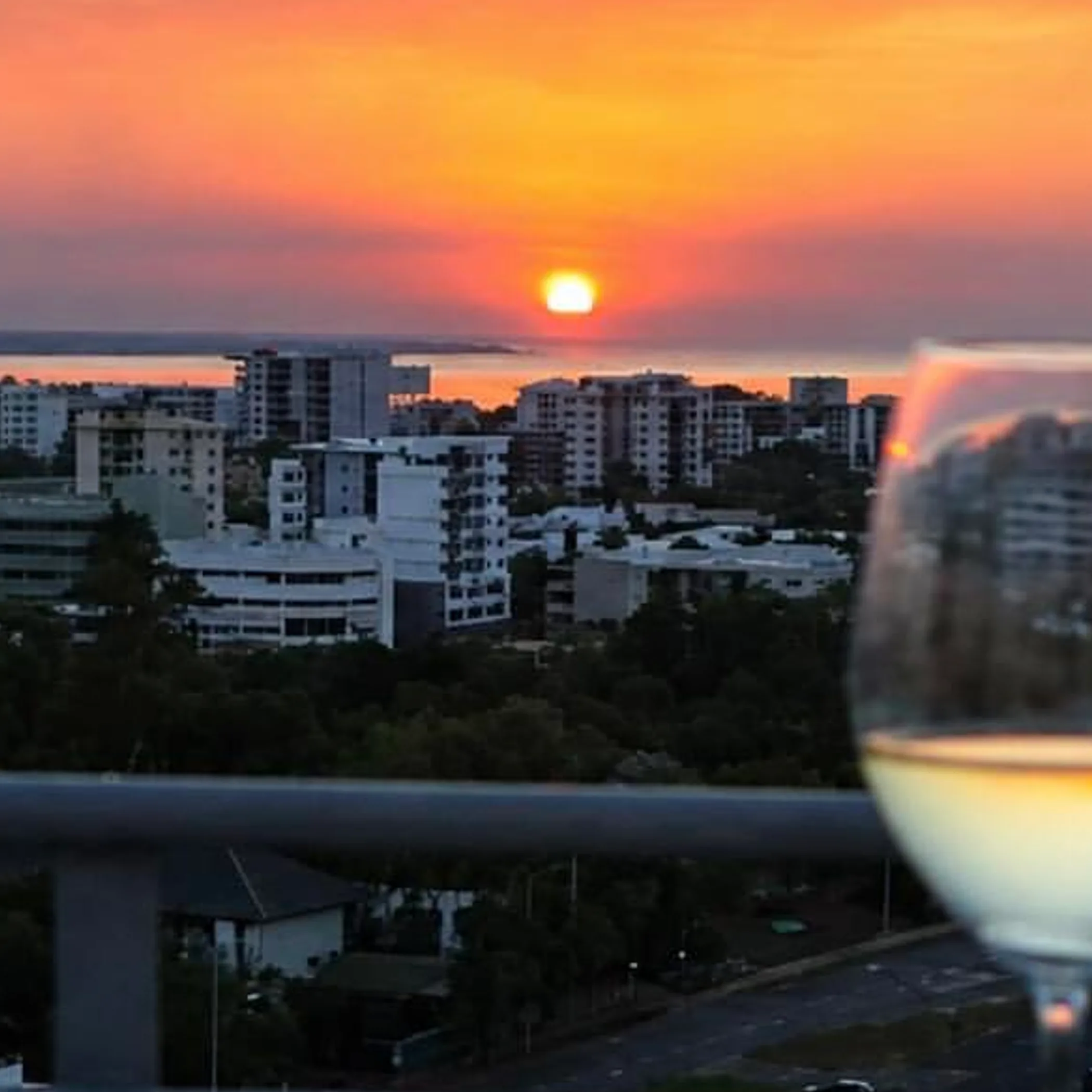
The months of December through February make up an Australian summer but do not give rise to a uniform national pattern of humidity. In the Top End it is hot and humid, the southern capitals are apt to have drier heat and in coastal towns one can go from a pleasant sea breeze to a sticky afternoon. These differences can also call for summer skincare adjustments for humidity.
Then there is the matter of time of day. A high reading in the morning may not be felt as such, come the afternoon a lower relative humidity can seem all the more oppressive when it is hot. Wind, dew point and rainfall are factors, and the mozzie has its own way of thinking.
| City | Typical Summer Pattern | What is usually noticed by travellers |
|---|---|---|
| Darwin | Very humid tropical wet season | Heavy rain, storms and you will be sweating fast in the sticky air |
| Brisbane | Warm, subtropical | Muggy nights and stormy afternoons, with the mornings tending to be humid |
| Sydney | Coastal and variable | Sea breezes can take the edge off but humidity will build ahead of rain |
| Perth | Hot and for the most part dry | Inland winds can be very hot, low humidity is the norm for many days |
| Adelaide | Dry heat, some humid variation | Temperatures put in a sharp rise until cooler air provides relief |
| Melbourne | Often moderate, changeable | One minute it is warm and dry, the next cool and damp |
| Canberra | Inland heat, not much humidity | Strong sun and cool nights with the heat feeling dry |
| Hobart | Maritime and cooler | Dampness from the coast can happen but heat stress is less of an issue |
Measuring Summer Humidity
Relative humidity is a measure of water vapour in the air vis a vis the maximum it can hold at a given temperature. The figure is dependent on the temperature, hence a 70 per cent on a cool morning is not necessarily worse than 45 per cent in the height of a hot afternoon.
The dew point is a truer gauge of stickiness. With a higher dew point there is more moisture in the air and sweat does not evaporate as well. There is also the Humidex which puts an apparent-temperature on the combination of heat and humidity, though it should not be taken as official heat-health advice.
Dew Point or Relative Humidity?
It is a common misconception that the two are interchangeable when it comes to comfort. As the temperature goes up the relative humidity can drop yet the air remains uncomfortable because warm air is capable of holding more water vapour.
When planning the day, factor in the cloud cover, wind, temperature and dew point. A still evening that is hot with a high dew point is hard to sleep in, a warmer day with a breeze and dry air is far more agreeable. Such is why a single number does not tell you all you need to know about Australia’s monthly humidity.
Average Summer Humidity By City
We have compared the broad climate behaviour of the country’s capital cities in the table below. It is qualitative by design since the 2026 data on hand does not have verified average monthly percentages for every location. For the specifics, the Bureau of Meteorology station data and summer outlook are the place to go. Long-term averages are indicative of typical conditions, they are not a prediction for each and every day in 2026.
| City | Climate Influence | Summer Humidity Level | Implications for planning |
|---|---|---|---|
| Darwin | Wet season and tropical | Highest in typical summer of the lot | Make allowances for storms, get out early |
| Brisbane | Subtropical with coastal moisture | High | Mugginess is to be expected, particularly pre-storm |
| Sydney | Tasman Sea and coastal | Variable, moderate to high | Humidity is only part of it, watch the dew point and wind |
| Perth | Indian Ocean and dry | Low for the most part | Dehydration and the sun are of more concern than stickiness |
| Adelaide | Coastal and dry inland | Low to moderate | Relatively dry air can still make for a severe hot day |
| Melbourne | Frequent fronts, maritime | Changeable and moderate | Have layers to hand, conditions alter in a hurry |
| Canberra | Continental and inland | The least of those listed | Stay on top of fire-weather, drink plenty of water and protect from the sun |
| Hobart | Cool maritime | Moderate to low | Do not let the cooler air lull you into underestimating the ultraviolet |
Where is the humidity at its peak in Australia?
Among the capital cities, Darwin is the obvious choice for the highest in typical summer. From December through February the tropical wet season is in full force, with its attendant warm air and high moisture content in the atmosphere, not to mention the clouds and regular rain.
But one should not be too concerned with the label; the practicalities are what count. In Darwin a walk of no great length can leave your clothes damp and you will find that the air-conditioner is less of an indulgence and more of an old friend when sweat refuses to evaporate from the skin. Then there are the storms which have a way of materialising in short order: put on a light rain layer and make sure any electronics are in a sealed bag.
Darwin Wet Season Reality
Do not think the wet season in Darwin spells rain from breakfast to night. More often it is a matter of some hard showers or thunderstorms giving way to bright, steamy weather. A road may be under water for a while, an outdoor tour might have to be rethought and in exposed spots it is easy to be made uncomfortable at temperatures the forecast has not yet flagged as alarming.
Those making their way through the Top End would do well to have some flexibility in their schedule and to put in place shade and water. Before you set off for a national park, a remote track or to go swimming, see what the local warnings say. The average humidity figure is not as relevant as the state of the roads, storm activity or crocodile safety.
Lowest Humidity City In Australia
Of the capital cities, Canberra is typically where one will find the lowest summer humidity by virtue of its elevation and being inland, drier than you would get in Sydney on the coast, or in subtropical Brisbane or tropical Darwin.
Yet dry air is no guarantee of a mild summer. Canberra can be very hot with intense sun and the threat of bushfires, and nights are cool. It is easy for a visitor to pack for dry comfort and be taken unawares by dehydration when the sweat goes quickly; a hat, sunscreen and a bottle of water have their place in the day bag all the same.
Summer in Perth and Adelaide is apt to be dry though a passing system can put some humidity in the air for a time. Lower humidity on a hot day means the air is not as sticky but heat stress is still there. Flat-out hot is hot regardless of whether the air is hugging you like a relative who is over friendly.
Why Humidity Varies Between Cities
In Australia geography is a better guide to humidity than the line of a state border. How much water vapour makes it to a city and lingers is down to seasonal rainfall, elevation, coastal winds, deserts and the tropical oceans.
Coast, Tropics And Inland Heat
There is a marked wet season in the tropics of Darwin. Brisbane gets its moist air from the Pacific and the warmth of the coast. Sydney’s proximity to the Tasman Sea yields a variable combination of sea breezes, northerly winds and systems that bring rain.
Perth and Adelaide will have strong heat if the conditions from inland come to the coast, and their summers are frequently dry. In Melbourne one day can see several air masses at play so the weather is fickle. Hobart is kept in check by its maritime location, whereas in Canberra the inland elevation allows for greater swings in temperature from day to night.
Such patterns are why you will not get a meaningful national average for humidity in a country that is part alpine, part desert and part tropical. Local data is required, for two suburbs of the one city can show different readings depending on how far they are from the coast or what buildings and vegetation are around.
How 2026 Conditions May Differ
While long-term averages are a good baseline, they offer no assurance that 2026 will be another year of the usual summer days. You could see a drier spell that raises fire danger and the harshness of the heat, or a season of above average wetness and humidity.
Treat the 2026 outlook as something to plan on, not a given. Forecast confidence is a matter of lead time and where you are. If there is camping or marine travel or work to be done outdoors, look at the latest updates before you depart.
Expectation Versus Reality
The expectation is that a low reading on the hygrometer equals comfort. The reality is that an afternoon of 38°C in Perth or Adelaide, for all its dryness, can be more of an ordeal than a cooler, humid one.
And a high percentage does not mean it is going to rain. Relative humidity can be high in the early hours without much in the way of precipitation. Better to consult the radar and storm warnings and the probability of rain.
The expectation is that Sydney will put Melbourne to shame in the humidity department. In reality, while Sydney is for the most part the more humid city when one makes a summer comparison, it is not a hard and fast rule; daily weather systems have a way of turning things around. One can be hot and sticky in Sydney ahead of a coastal change, yet find Melbourne cool and damp.
A Day with Humidity
It is a factor in everything from sleep and exercise to what one wears and how one travels, let alone its effect on the skin. It dictates the rate at which sweat dries up, accounting for why you might be clammy in Brisbane but think you are dry in Canberra or Perth.
If travelling, make of the morning for any outdoor pursuits in Darwin or Brisbane, keep water to hand and put some leeway in for storms. In Canberra, Adelaide and Perth there is need to plan for the heat and put on sunscreen and seek out shade. A light outer layer is advisable in Hobart and Melbourne as a cool change can come on without much fanfare.
Summer Essentials
- Have the Bureau of Meteorology forecast and radar at your fingertips along with local observations and warnings.
- An early start is best for sightseeing, paddling or a cycle in the more humid cities.
- Water, sun protection and a rain layer that packs down small should be in your bag.
- When the dew point is high, give yourself time to recover after a workout.
- And before venturing into the remote, see if there are any park alerts, fire danger or road closures.
Getting around is a matter of the city. Darwin tours and wet-season roads need to be confirmed. In Brisbane one can mix trains, ferries and buses but must factor in storm delays. Public transport in Sydney serves the coast well enough, provided the exposed walks are checked for weather. For the outer reaches of Perth, Adelaide and Canberra a car is preferable, whereas central Melbourne and Hobart are well served by public transport.
As for cost, that is dependent on one’s itinerary and lodging so a responsible guide will not put a fixed price on things. Put some budget aside for bottled water, repellent, a good sunscreen and the like. Should an operator call off a trip on account of unsafe conditions or a storm, consider it sound logistics, not fuss.
Skin Care in the Humid Weather
There is a tendency for the skin to become oily or irritated in these conditions, or to lose moisture and tighten in the dry inland heat. Add in salt, dust, sweat and too much face washing and you have a bit of a mess on your hands. I learned as much in my time in and around Cairns and the Great Barrier Reef: reef-safe sunscreen is a must but slather on too much of a heavy product and by midday it is as rough as guts in the heat. Better to go with lighter textures and be thorough with cleansing after a good sweat, all the while maintaining broad-spectrum protection.
Shine is not the same as being hydrated. Drink your water and do not scrub at any irritation. Reapply sunscreen as the label and your exposure dictate. Any rash or painful reaction of an acne-like nature warrants a word with a health professional.
Some Questions on Australian Summer Humidity
Travellers have a few standard questions when making comparisons. The following answers put normal climate patterns in perspective, eschewing claims that would need to be backed by station data.
Which is the most humid?
Of the capital cities, Darwin has the highest typical summer humidity, being in the throes of its tropical wet season from December through February. But wind, rainfall and other systems can alter the daily rankings.
And the least?
Canberra is usually at the bottom of the list among the listed capitals. You will find dry summers in Perth and Adelaide as a rule, though any given day may not conform to the long-term trend.
Will 2026 be a hot one?
We cannot in good conscience give a national answer on 2026 temperatures or humidity for want of verified figures. See what the Bureau of Meteorology has to say in their outlook; a hot summer can be dry, humid or something in between.
Sydney or Melbourne?
Being on the coast and under the influence of the Tasman Sea, Sydney is the more humid in summer. Melbourne is very changeable and on occasion can be damper, cooler or more of an ordeal than Sydney.
Does it mean rain if the humidity is high?
Not necessarily. You can have high relative humidity in the early hours or at night and no rain to speak of. Do not go by the percentage, look at the probability of rain, the cloud cover and any storm warnings.
Make Your Plans Accordingly
In short, Darwin is where the humidity is, Canberra is the dry option and the rest, from Brisbane to Hobart, are somewhere in between and subject to geography. Blake Morrow would have you check conditions prior to leaving and not lump heat, sun and dry air together as one risk. Consult the Australian Bureau of Meteorology for the latest. Some forethought is better than to find your shirt and your dignity have been done in by lunchtime.
